

Sometimes I find myself engaged in conversation with someone, and I think “this is a person who will be interested in my thoughts about the words we use to describe colours in birds”. I have never once been correct. You can’t blame a guy for trying though. Surely I’ll get it right one day. Won’t I?
The thing about bird colours, if you think about it, is that we desribe them using a host of words that we never use in any other circumstance. You wouldn’t paint your living room fulvous, for example, but we accept the Fulvous Whistling-Duck as though it’s normal. You wouldn’t buy a ferruginous car, but we don’t even question Ferruginous Pygmy-Owl. You wouldn’t wear your semiplumbeous shirt today, but a Semiplumbeous Hawk is a-ok.
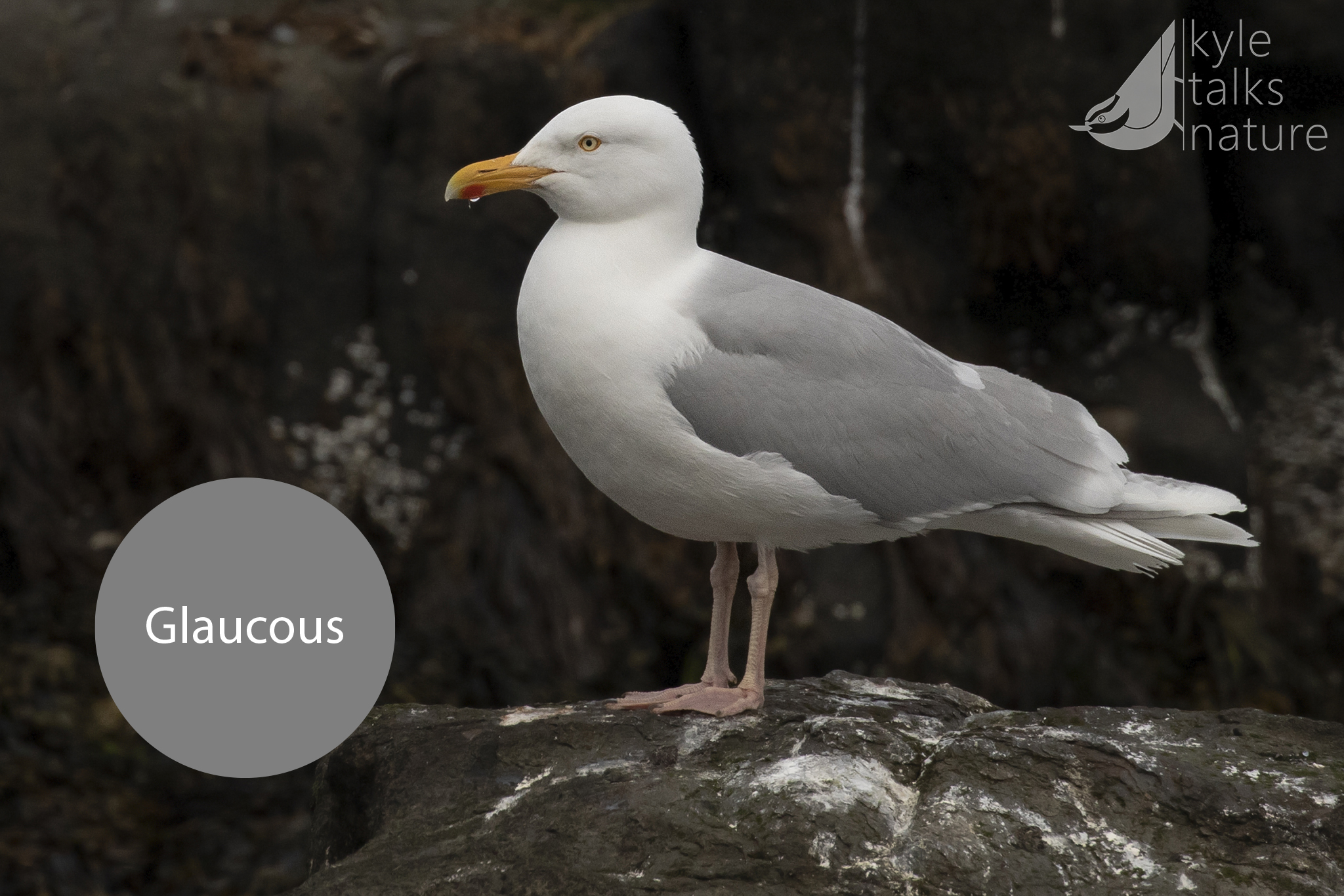
My latest attempt at this conversation made me think of this old meme, which is a very accurate depiction of how birders interact with the rest of the world but also a gateway into the rich diversity of bird-colour-words. For a bird-word-nerd like me, the world of bird colours is a fascinating rabbit-hole. A rabbit-hole that, like so many others, I cannot resist.
I got a bit lost in this particular warren recently, trying to pick out all of the words we use to describe colours in the names of all the species of birds in the world. Many hours and several satisfying Excel spreadsheets later, here we are.
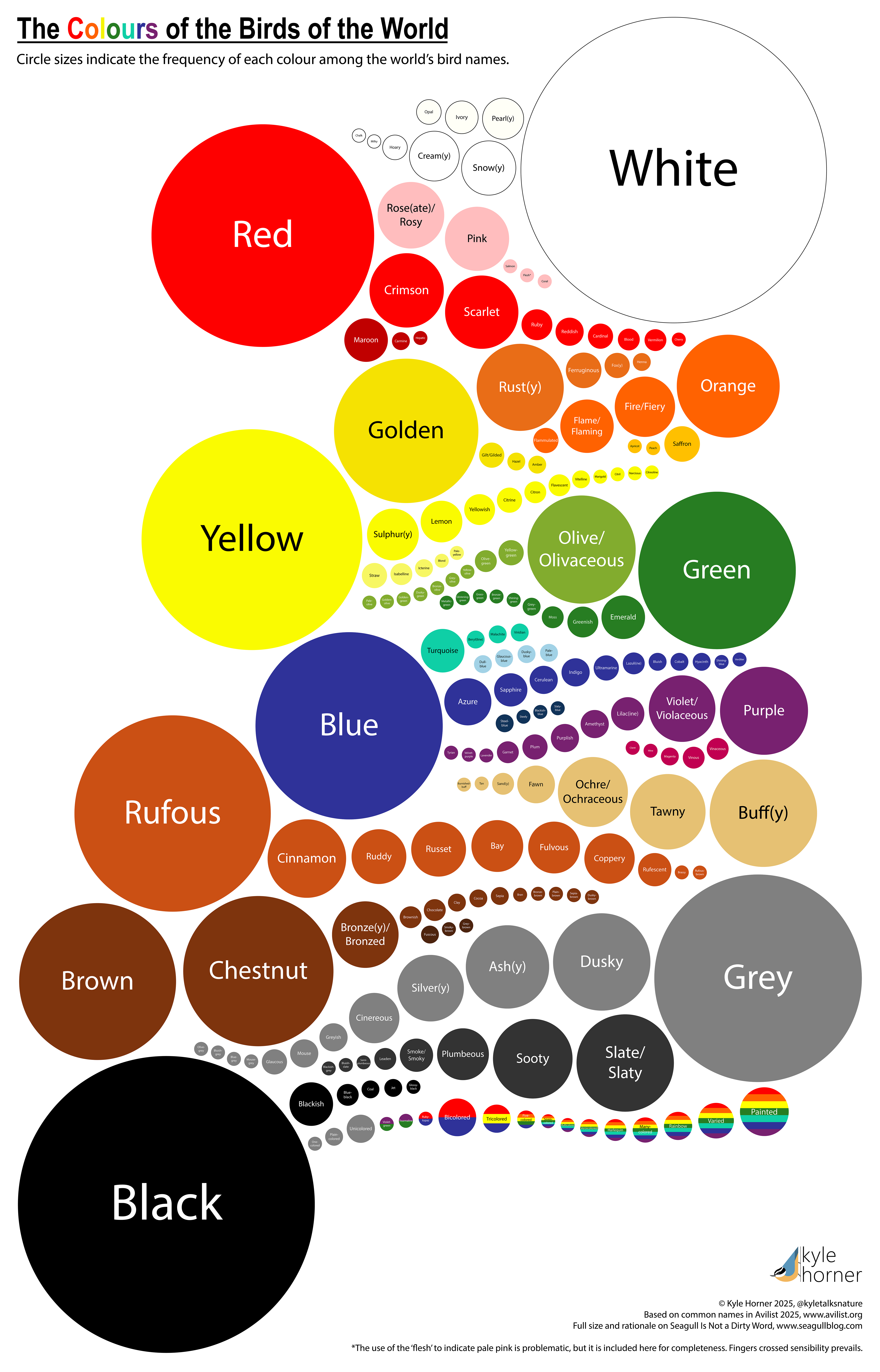
What we are looking at here is all of the bird-colour-words currently in use in bird names, represented by circles. The area of each circle is proportional to the number of times that word occurs among the names of all the world’s birds. I will append my methods down below for anyone who’s just as weird as me, and wants to know how I got from there to here. First, though, here’s a quick breakdown
- The diagram contains 193 distinct colour terms.
- There are a little over 4600 occurrences of these colour terms in bird names.
- The easy winners are White with 610 occurrences and Black with 591. Red is a distant third with 316.
- Included are 17 terms which do not reference a specific shade, but rather describe multiple colours (eg. Rainbow, Five-colored).
- There are 66 terms that occur only once (the smallest circles), making their bearers unique among the birds.

The highlight of this endeavour for me is the collection of words that, like fulvous, are really only used to describe the colours of birds. Perhaps there’s an opportunity here to adopt some new vocabulary and bring these terms into your day-to-day conversation. I’ll leave that to your discretion, reader, but here are a few of my favourites just in case:
- Hepatic – liver coloured, brownish-red
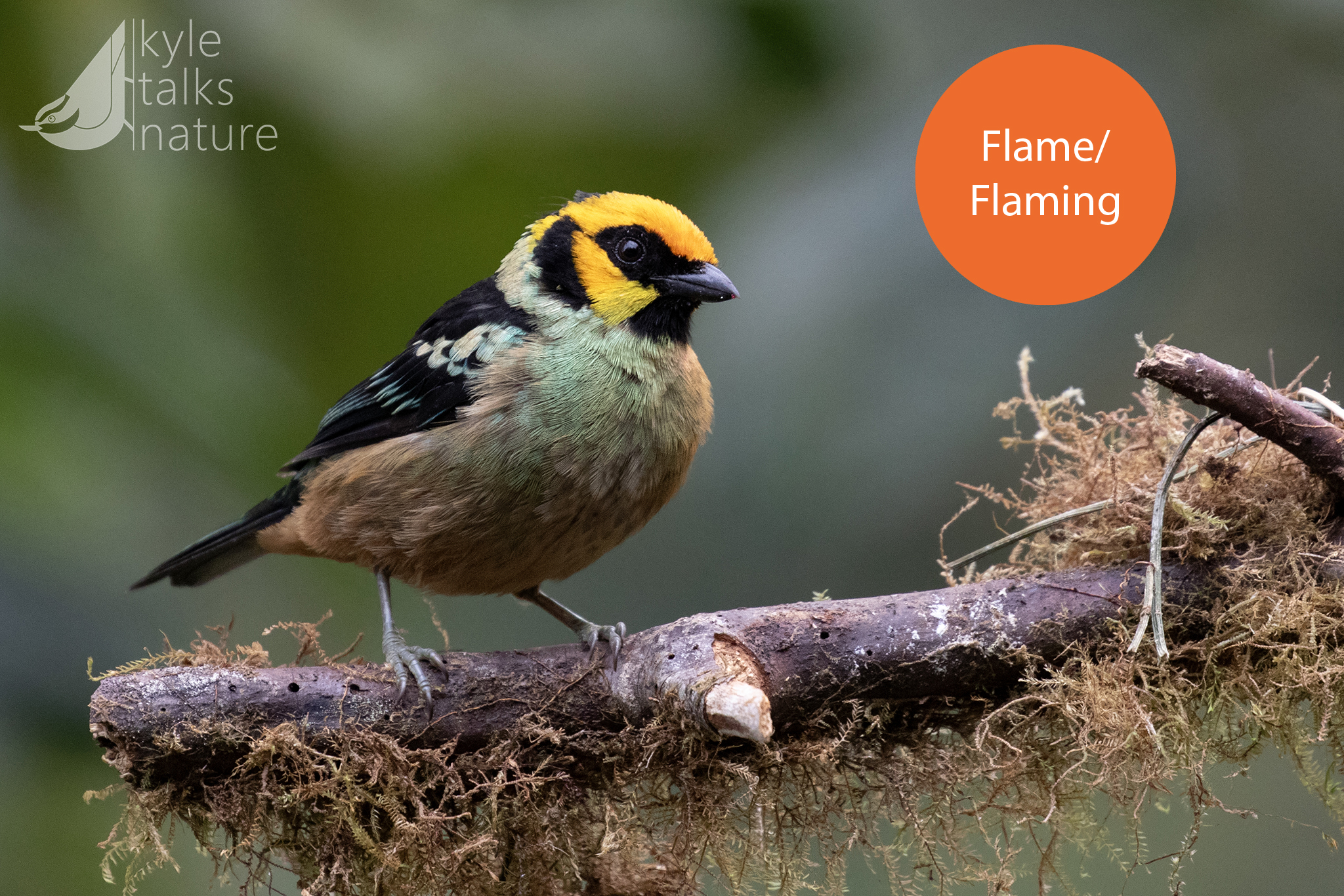
- Flammulated – flame-coloured, or with flame-like markings
- Icterine – yellowish, or more specifically the colour of jaundice
- Isabelline – pale grey-yellow, parchment coloured
- Citreoline – yellow, lemon coloured
- Flavescent – yellowish, turning yellow
- Vitelline – yellow, specifically the colour of egg yolk
- Berylline – the colour of the blue-green variety of the mineral beryl
- Malachite – the colour of the blue-green mineral of the same name
- Viridian – blue-green, leaning towards green
- Lazuline – blue, the colour of the gemstone lapis lazuli
- Ultramarine – deep blue, the colour of a pigment made from lapis lazuli
- Vinaceous – red wine coloured
- Lilacine – pale purple, lilac coloured
- Fuscous – brownish-grey, dark and sombre
- Glaucous – pale blue-grey or green-grey, as with a waxy or powdery coating
- Cinereous – variously ash-grey, blackish-grey, or brownish-grey
- Semiplumbeous – half dull grey, the colour of lead
- Hoary – greyish or whitish, especially as if pale with age
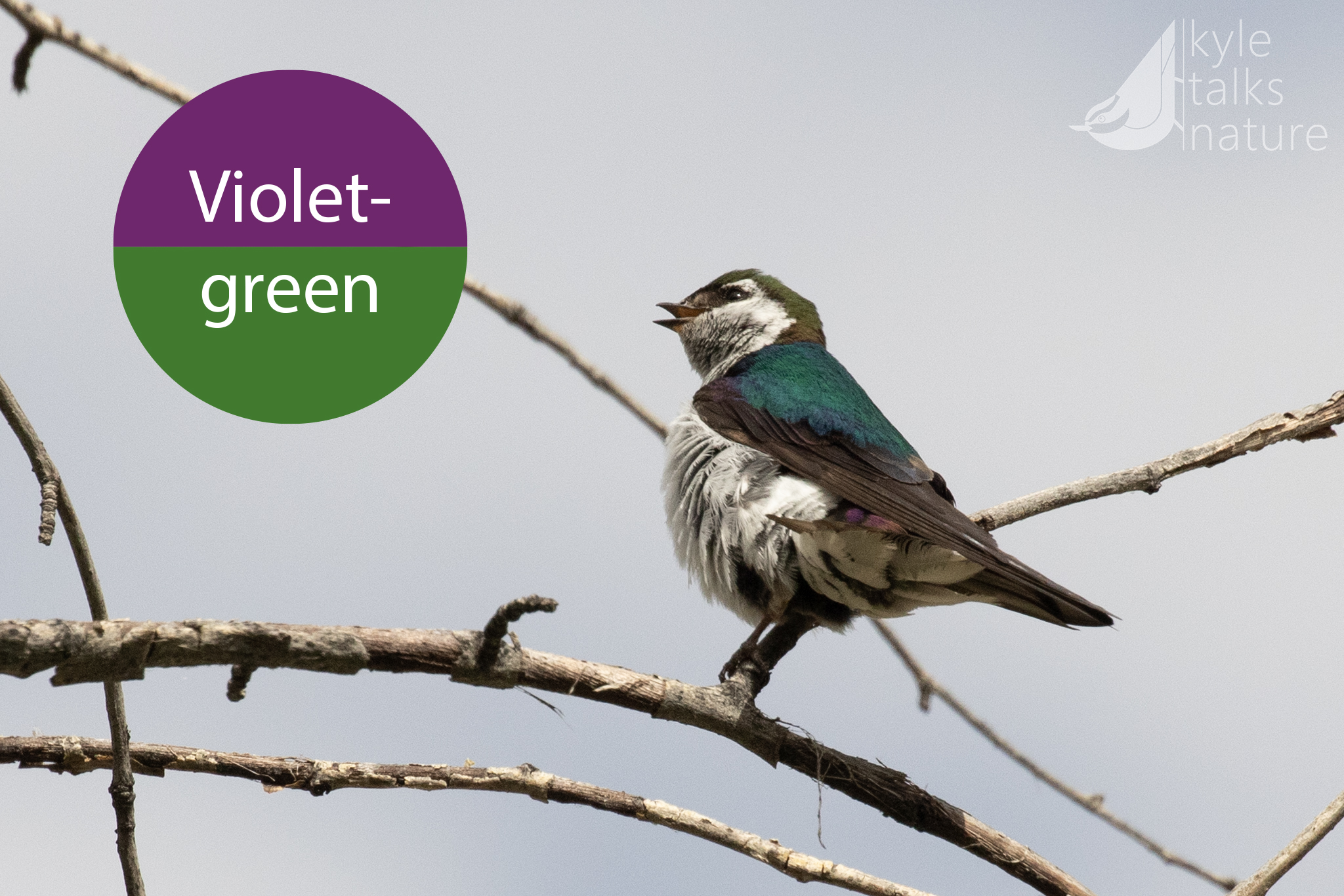
- Tourmaline – referring to the variable gemstone of the same name, seemingly specifically to the bi-coloured variety which is purplish and greenish
Well there you have it, that thing you never asked for and don’t really need. At least I’ll be able to sleep tonight, having done the thing that my brain told me to do for reasons I cannot articulate. I hope you’ve enjoyed the colours of the birds at least half as much as I have. May you have a flavescent day.
(Methods below, for the weirdos)
Methods/Rationale:
- I used the English names from AviList 2025. Common names vary by source, but I needed a standard and AviList seemed as good as any. This surely influences the counts — AviList uses Grey Plover, for example, rather than Black-bellied Plover — but overall I assume the effect is minimal.
- I extracted terms which refer to a specific colour (like Blue or Yellow-olive) or indicate colour in some way (like Multicolored). I excluded words which refer only to patterns (like Spotted or Mottled) as these don’t provide any colour information. I also excluded very broad descriptors like Dark, Pale, or Plain, with the exception of the term Plain-colored simply because it contains the word ‘color’ and it felt wrong to leave it out.
- Perhaps controversially, I only looked at the descriptive (adjective) part of each bird name, and ignored the terminal (noun) part. For example, I consider Red-crested Cardinal to be an occurrence for the term ‘Red’ but not for the term ‘Cardinal’. The reasons for this are threefold:
- The noun part of a name often applies to more than one bird, not all of which may share the namesake colour. This produces some oddities like Yellow Cardinal (which is yellow) or Purple Indigobird (which is purplish-black).
- Including the noun parts would likely increase the frequency of the most common colours (red, blue, etc), making the less common colours even smaller by comparison. Perhaps an unscientific reason to exclude them, but it makes the final product nicer to look at.
- Eliminating the noun parts makes a simpler list to work with, and to me it makes for a level playing field and an interesting sample.
- This sounds obvious enough, but I only included occurrences in which a word is used to indicate a colour. For example, the word ‘sand’ indicates a colour in Sand-colored Nighthawk, but seemingly not in Sand Partridge. Admittedly this is tricky to parse out without literally reading through every single occurrence, but I have done my best.
- I combined terms which are different forms of the same word (like Buff and Buffy, or Gold and Golden). I did not combine terms which might have identical meanings (like Rusty and Ferruginous) as that is a judgment call, and each term may have its own nuance. Likewise I have assumed that hyphenated colour words (like Grey-green or Golden-olive) or colours with descriptive adverbs (like Glistening-green or Glossy-black) are distinct and distinctive.
- I learned the term ‘circle-packing’ for this exercise, which is not as dirty as it sounds. I set the size of each circle using the formula for area, A=πr2, setting the area to the number of occurrences then calculating radius. Multiply by 2 for diameter, multiply by 120 just to get a usable number of pixels for the graphic. This fifth grade math was more of a struggle than it probably should’ve been.
- I bumped up the size of the smallest circles (representing just a single occurrence) slightly to make the text more readable. They are still notably smaller than the other circles.
- I broadly grouped the terms by colour for visual effect. This is just my rough approximation. Don’t @ me.
- I used the American spelling of ‘colored’ in terms like Versicolored and Many-colored as this is the spelling used in AviList. Yes I found it upsetting every time.
- All judgment calls made at my discretion, accuracy not guaranteed, nobody’s perfect, don’t stake your life on it, etc, etc.
2 replies on “The Colours of the Birds of the World”
Total. Awesomeness.
I’m glad there’s at least one more bird-colour-word-nerd out there to appreciate my strange fixation!